Historic buildings are not barriers to creative growth; they are often the conditions that enable it. Historic England’s Heritage Works for Creative Businesses report highlights this relationship. Through our experience of adapting and reusing existing buildings, we have seen how heritage assets can become powerful platforms for education, enterprise and cultural regeneration.
The report highlights the important role that historic buildings play in supporting the UK’s creative sector. Creative businesses are often drawn to older buildings because they possess qualities that are difficult to replicate in new developments. Layers of occupation, architectural character and a strong sense of place create distinctive environments that reflect the values often associated with the creative industries: individuality, innovation and entrepreneurship. These buildings provide more than space; they help shape identity, support creative activity and contribute to the cultural life of the city.
For architects working with existing buildings, these findings will feel familiar. At Hudson Architects, we have long seen how historic structures can support new forms of learning, making and enterprise. Their value extends beyond heritage significance alone. They provide distinctive spaces that encourage creativity, foster collaboration and remain part of the evolving story of the city.
Perhaps more importantly, they often contain latent potential that is easy to overlook. Generous volumes, robust structures, unusual spatial arrangements and strong connections to place can all provide opportunities for new uses that would be difficult to achieve through new construction alone. The challenge is not simply to preserve these qualities, but to recognise and unlock them.
Unlocking this potential requires more than preservation alone. It demands a careful understanding of how existing buildings work, what qualities are worth retaining and how thoughtful interventions can enable new forms of occupation. The role of the architect is not simply to conserve the past, but to uncover opportunities within existing structures and translate them into spaces capable of supporting contemporary life.
Across a number of our projects, including our work with Norwich University of the Arts, we have explored how the careful adaptation of existing buildings can reveal this potential while strengthening connections between people, place and history.
Our experience has shown that creative potential can be found in many different forms of historic building. Former Sunday schools, department stores, banking halls and commercial premises have all provided the framework for new educational, cultural and entrepreneurial activity. Their original uses may have changed, but the qualities embedded within them – character, adaptability, memory and connection to place – continue to create value for new generations of occupants.
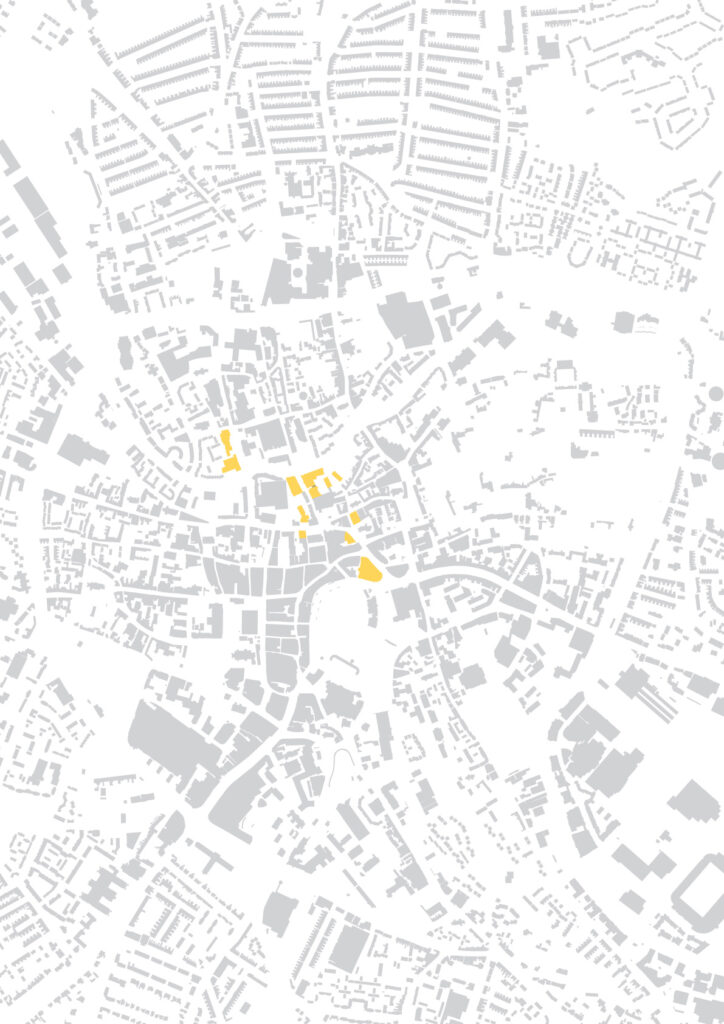
The development of the Norwich University of the Arts estate provides a compelling illustration of this approach. Rather than creating a detached campus, the University’s growth has been shaped through the occupation and reinvention of buildings already present within Norwich’s urban fabric, creating a network of learning, making and enterprise spaces embedded in the life of the city.
At Boardman House, a Grade II listed former Sunday School was transformed into the University’s School of Architecture. Rather than separating contemporary learning from the building’s history, the project allows students to inhabit it directly. Historic fabric sits alongside carefully integrated new interventions, creating an environment where the study of architecture takes place within a building shaped by adaptation, craftsmanship and time.
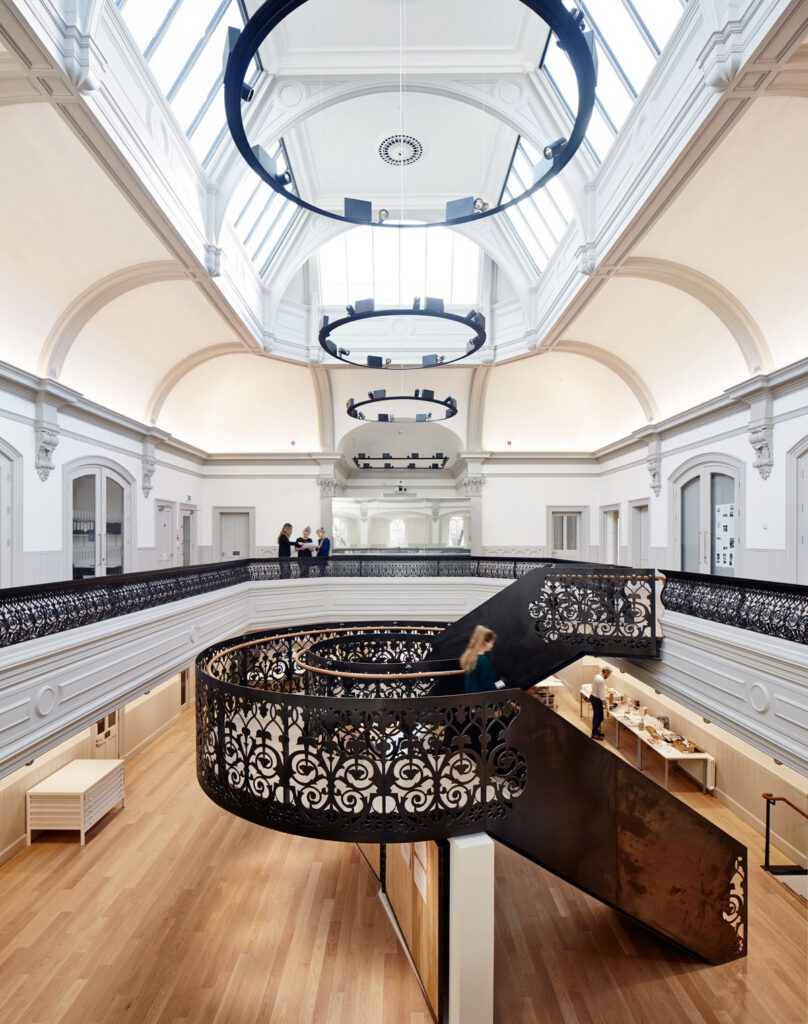
Guntons posed a different challenge. Occupying a former department store, the building suffered from deep floorplates, limited daylight and a complex internal arrangement. By introducing a glazed atrium and new steel staircase at its centre, daylight was drawn deep into the plan and spaces once isolated from one another were connected. Conditions that might typically justify demolition instead became the basis for transformation.
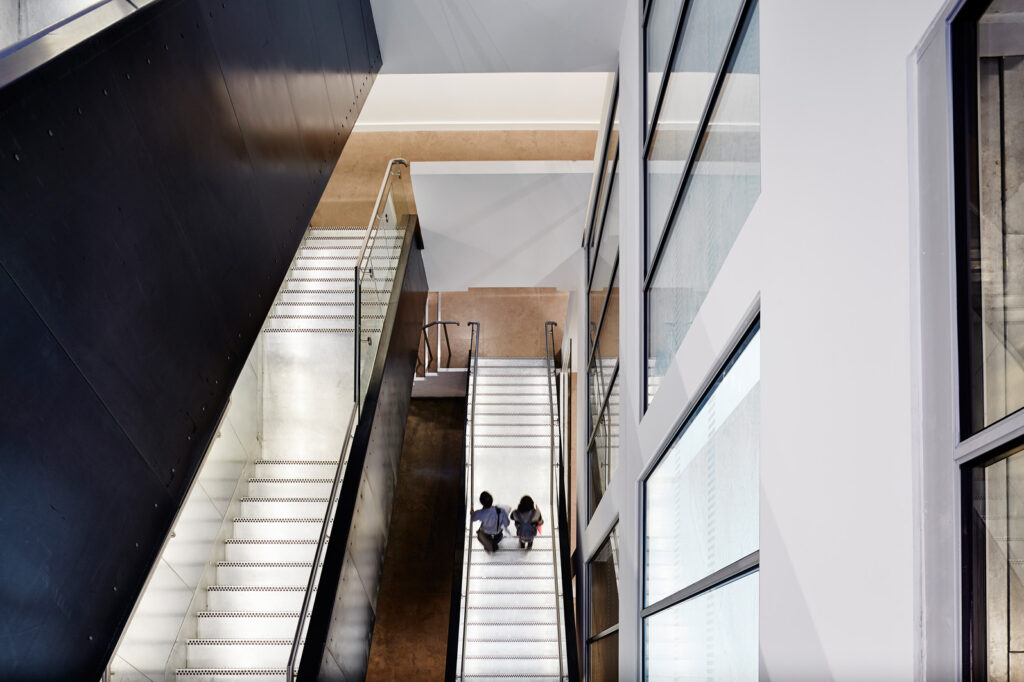
Bank Plain demonstrates one of the greatest advantages of working with existing buildings: the opportunity to inherit qualities that would be difficult to create anew. The former banking hall offered a scale and generosity of space rarely achievable within a contemporary educational brief. Over time, the building has accommodated very different forms of public life – from banking tellers and financial transactions, to a youth and music venue, and now a creative project space for higher education. Each use has built upon the spatial qualities inherited from the last, demonstrating the remarkable adaptability of the existing structure. By adapting rather than replacing the building, those qualities continue to support new forms of creative learning and occupation.
A similar principle can be seen at Norwich Guildhall, where a medieval city hall has been adapted to support the offices and operations of the Norfolk & Norwich Festival. This project is less about transformation than occupation. Working closely with the Festival, we developed a programme of careful interventions that improve accessibility, support contemporary use and enable the building to welcome wider audiences throughout the year, while respecting the significance of its historic fabric.
What emerges across these projects is a broader understanding of heritage, not as an exercise in preservation for its own sake, but as a form of cultural infrastructure. Historic buildings act as a kind of collective memory bank, accumulating layers of use, meaning and association over time. Their value lies not only in what they tell us about the past, but in their capacity to evolve and adapt to changing needs while remaining embedded in the cultural life of the city.
At a time when the construction industry is increasingly focused on sustainability, resource efficiency and place-based development, the adaptive reuse of existing buildings offers a compelling alternative to new development. Retaining and transforming existing fabric preserves embodied carbon while reducing the environmental impact associated with demolition and new construction. Combined with thoughtful energy retrofit measures, these projects demonstrate how environmental performance and heritage value can be addressed together. At the same time, they preserve the character, identity and continuity that creative communities value most deeply.
Historic England’s Heritage Works for Creative Businesses report argues that heritage can support innovation, entrepreneurship and long-term resilience. Our experience suggests the same.
Historic buildings are not simply assets to be conserved, nor commodities to be replaced. They are repositories of memory, identity and embodied resource, capable of evolving alongside the communities they serve. The task of architecture is to unlock that potential – finding new uses, new audiences and new relevance while maintaining continuity with the past.
In this way, heritage becomes more than preservation. It becomes a framework for creative futures.
Author: Louise Boddie