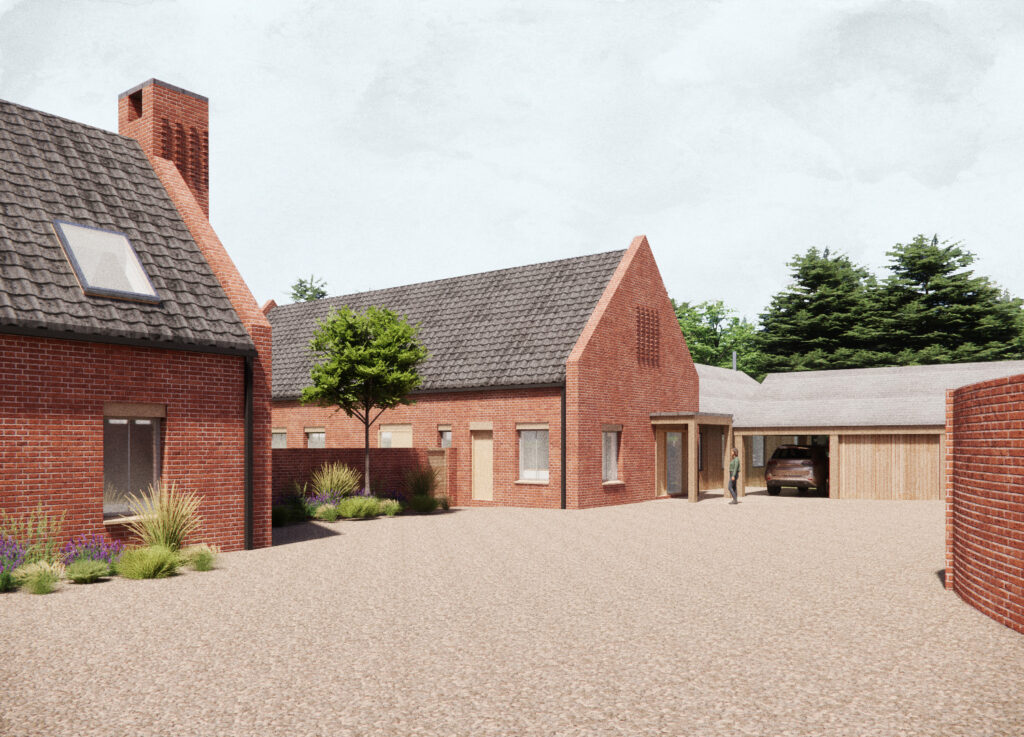
We’re pleased to share that our scheme for three contemporary, contextual houses in Coltishall has recently achieved planning approval at committee.
Located just a short walk from the River Bure, the site occupies a transitional edge between the village and open countryside, termed “settlement fringe”. Adjacent to the Coltishall Conservation Area and immediately north of the Grade II listed Norfolk Mead Hotel, the project required a careful and considered response to both heritage and landscape.
Rather than seeing these constraints as limitations, we approached them as an opportunity to create a more thoughtful and contextual form of housing, one rooted in the character of the site and its surroundings.
A Contemporary Response to Local Character
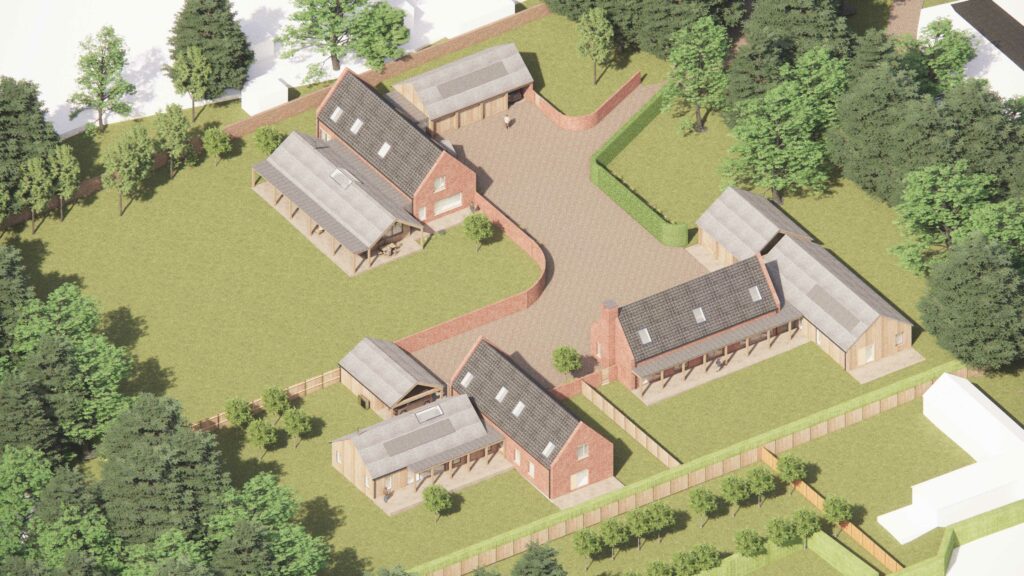
The design is based around the idea of three homes clustered around a shared walled entrance court, drawing inspiration from the historic walled garden behind the Mead Hotel. This arrangement creates a strong sense of arrival while allowing each home to maintain its own private corner of the site.
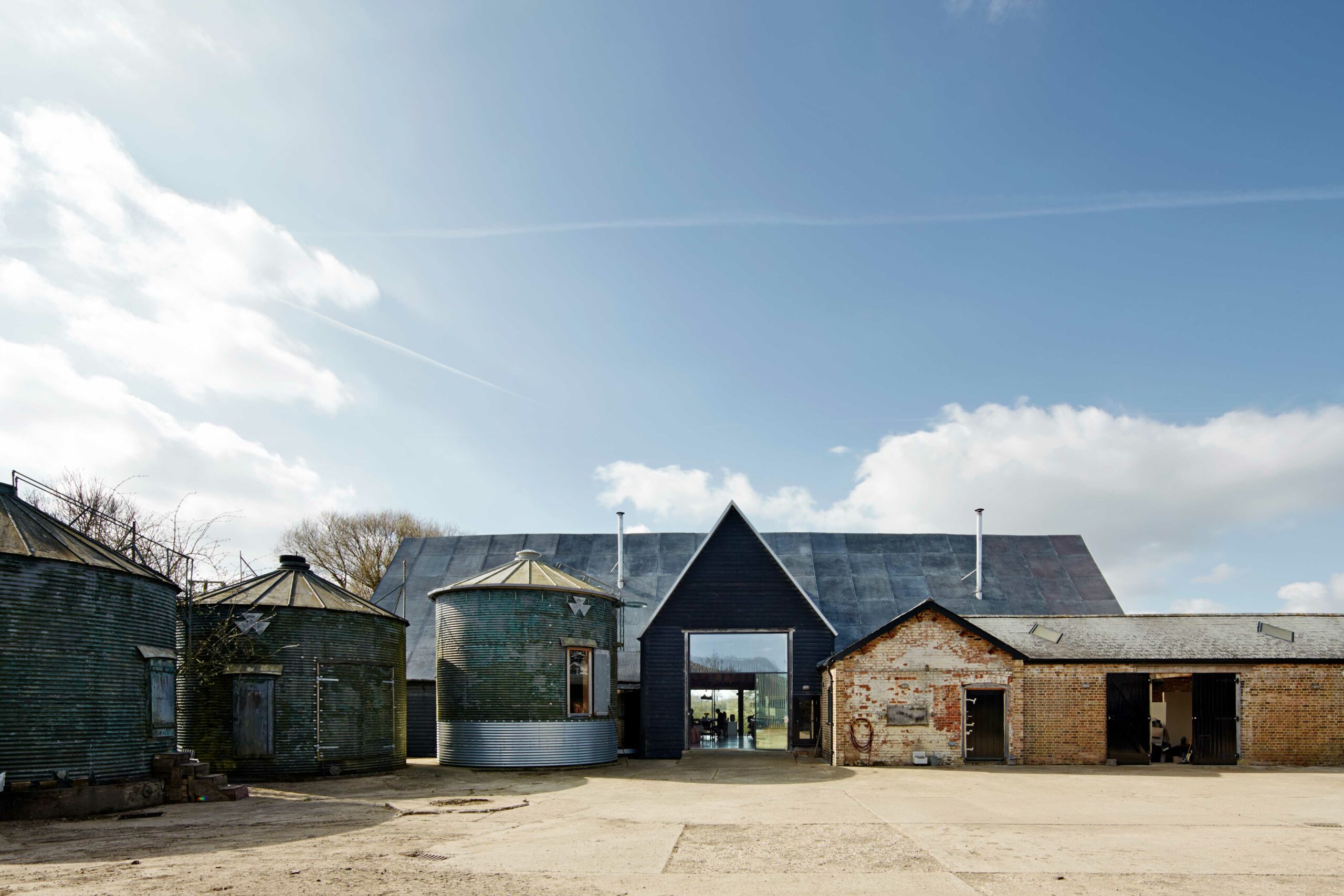
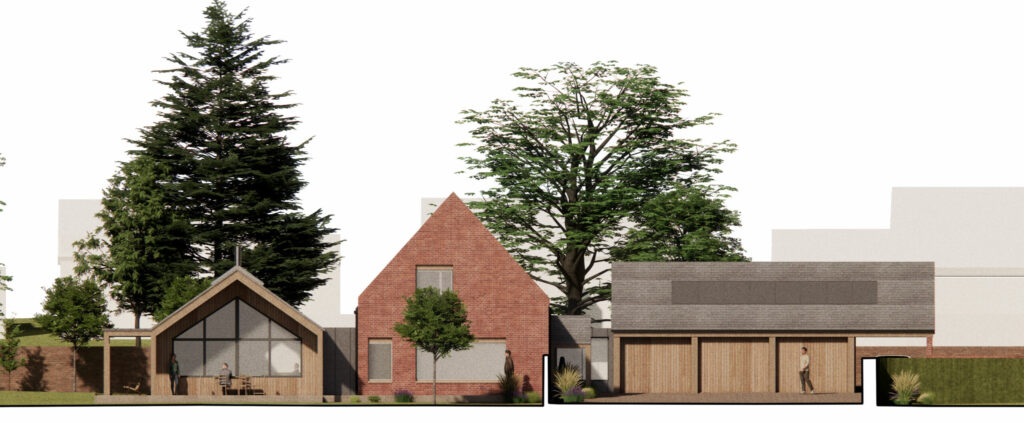
At the heart of each home is a parapet gabled brick range, referencing the ancillary agricultural barns behind the hotel. The proportions, material palette and detailing have been carefully developed to read as a contemporary extension of the listed hotel complex.
While the homes share a common architectural language, each responds differently to its position within the site. Variations in orientation, openings and external spaces allow each house to engage individually with the surrounding landscape and changing light conditions throughout the day.
The approach was positively received during the planning process, with the Heritage and Design Officer recognising the scheme’s success in reflecting the “clusters of historic agricultural buildings” characteristic of the area.
Navigating Planning Constraints
Development within the Broads settlement fringe is subject to strict planning policy, requiring proposals to demonstrate that they will “protect, conserve and where possible enhance the special qualities, local distinctiveness and natural beauty of the area.”
The site also presented several technical and planning challenges including highways and visibility concerns and nutrient neutrality. Working closely with the wider consultant team, these issues were addressed through a detailed transport statement supported by site-specific speed and traffic monitoring data. The study demonstrated that the additional vehicle movements generated by the scheme would have minimal impact when considered in the context of the neighbouring hotel and the wider local road network.
Delivering Better Housing Through Context-Led Design
Project such as this demonstrate the value of a site-specific approach to housing design, particularly within sensitive rural and heritage settings.
Too often, edge of settlement sites are approached with generic housing typologies that fail to respond meaningfully to local character or planning context. This scheme sought to create homes that feel embedded within their surroundings, architecturally, materially and spatially.
The approval reflects the benefits of combining careful planning strategy with high quality contemporary architecture and shows how smaller housing developments can positively contribute to the character and identity of rural communities.
If you have a fringe site or a housing project in a sensitive location, we’d love to hear from you.